

Groundwater and Wells
Understanding groundwater
Well Water Program
Cone of Depression
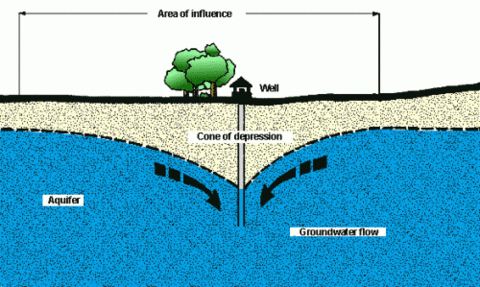
Pumping from a well in a water table aquifer lowers the water table near the well. This area is known as a cone of depression. The land area above a cone of depression is call the area of influence. Groundwater flows towards the well into the cone of depression which can change the natural direction of groundwater flow within the area of influence around the well.
Well Interference
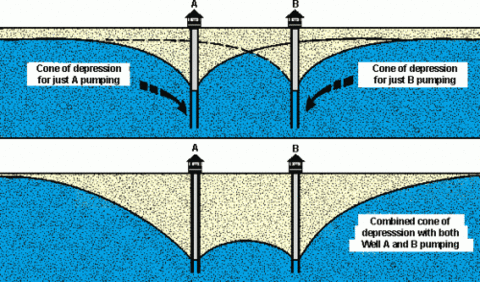
If the cones of depression for two or more wells overlap, there is said to be well interference. This interference reduces the water available to each of the wells.
Induced Recharge
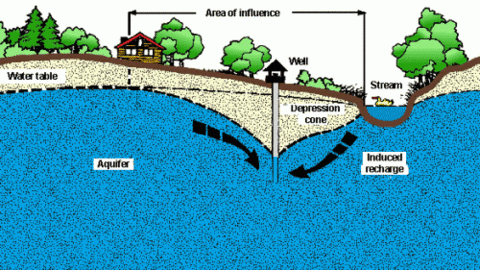
The cone of depression from a well might extend to a nearby stream or lake. This lowers the water table below the stream or lake level. As a result, the stream or lake begins to lose water to the groundwater aquifer near the well. This is know as induced recharge.
Streams and wetlands can be completely dried up by induced recharge from well pumping. The Oregon Water Resources Department considers wells within 0.25 miles of a stream to have a potential effect on stream flow.
This section, including most illustrations, was adapted with permission from "What is Groundwater?" by Lyle Raymond, Jr. (© Cornell Cooperative Extension, Cornell University, July 1988).